
CollX: Sports Card Scanner
CollXSports
4.63.40K Reviews
- Version
- 4.1.5
- Installs
- 1.00M
- Age Rating
- Everyone
Screenshots
Our Review of CollX: Sports Card Scanner
 Analysis by Appyee
When a box of sports cards gets opened at the kitchen table, the first question is often less about collecting strategy and more practical: “What is this one, and is it worth keeping?” I like that CollX: Sports Card Scanner is built around that moment. It gives a household a way to identify cards, keep track of a collection, and explore buying or selling without turning the hobby into a spreadsheet project. The shared-device angle does need a little thought, though: a phone used by several collectors can make quick lookups easy, but personal accounts and collection records should be treated as belonging to the person who set them up.
A useful tool for the cards already on the table
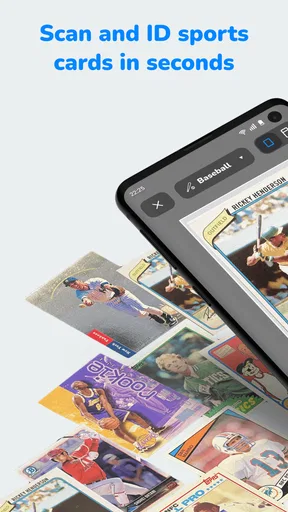
For a parent sorting through a child’s cards, siblings comparing finds, or a collector helping a relative clear out a drawer, scanning is a natural place to start. Rather than guessing from a player’s name or searching listings one by one, you can use the camera to identify a card and check the information the app brings up. That makes it handy for a first pass through a stack: separate cards you want to investigate from duplicates or cards you are not ready to price carefully.
I would still treat a scan as a starting point, not a final appraisal. A card’s condition matters, and a quick camera check cannot settle every question about wear, authenticity, or whether a particular copy matches the details you need. Before agreeing to a trade or setting a selling price, inspect the physical card and compare the result with the details shown in the app. That extra pause is especially useful when the card looks unusually valuable or the scan has matched a similar-looking version.
Make shared use easier without blurring ownership
In a family setting, the simplest workflow is to decide whose collection is being catalogued before scanning begins. If everyone adds cards into one person’s account, the resulting list may be convenient for a household overview, but it can become confusing when a card belongs to a different family member or someone later wants to move their own cards elsewhere. I would agree on a basic rule first: scan one person’s cards at a time, and keep a note of whose stack is being handled.
This is not a substitute for separate accounts or a family-management system, and I would not assume the app provides household controls. If several people share one phone, avoid treating the device itself as proof that the collection belongs to everyone. The account holder should be clear about what is being added and who can make decisions about selling or trading. For a child’s collection, an adult can help with research and organization while keeping any purchase, sale, or trade decision in the adult’s hands.
Use the price information with a collector’s judgment
The market tools are most helpful when they support a decision rather than make it for you. A collection value can give you a rough view of how the cards are moving as a group, while individual card information can help you decide which pieces deserve closer attention. I would not use a displayed figure as a guaranteed offer: condition, timing, and the exact version of a card can all affect what another collector is willing to pay.
A practical routine is to scan a batch, review uncertain matches, and then revisit the cards you might actually trade or sell. That keeps the app from turning every card into a high-stakes pricing exercise. It also helps avoid the common trap of treating an estimated collection total as money you could receive immediately. The app can make research more convenient, but a buyer still has to agree on the card and the price.
Who will get the most out of it?
I see the best fit in collectors who have enough cards to lose track of them, people who enjoy checking market movement, and newcomers who need a less tedious way to identify what they own. It can also be a useful companion at a card meetup: you can look up a card while discussing a trade instead of relying on memory, then take time to check the condition before committing.
On the other hand, if you only own a few cards and rarely buy, sell, or trade, a dedicated collection app may be more than you need. Someone who wants a meticulous inventory with fields tailored to a particular set may prefer a spreadsheet or a specialized cataloging approach. And if you mainly want to browse cards without tracking value or interacting with other collectors, a simple search may be enough. The advantage here is the combination of scanning, collection tracking, and community activity; that combination is less compelling if you will only use one part of it.
Everyday use: a quick sort, then a careful check
Imagine finding a shoebox of cards while tidying a closet. I would sort it into manageable batches, scan the cards I can identify, and set aside anything that produces an uncertain match or looks especially interesting. Then I would check those cards individually in good light, paying attention to condition and details before I relied on a price or discussed a trade. This is more useful than trying to scan the whole box in a rush, because the camera is there to speed up identification, not replace careful handling.
That workflow also makes the app easier to share. One person can scan while another checks names and sets against the physical cards, but the pair should agree on whose collection is being recorded. It is a small distinction that prevents a friendly sorting session from becoming a muddled account later. If the goal is simply to decide what to keep, the household can use the scan as a conversation starter without treating every card’s listed value as a verdict.
What to expect from the hobby community
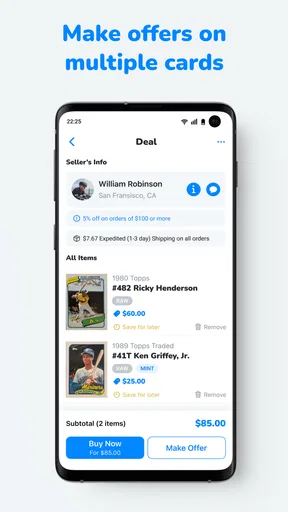
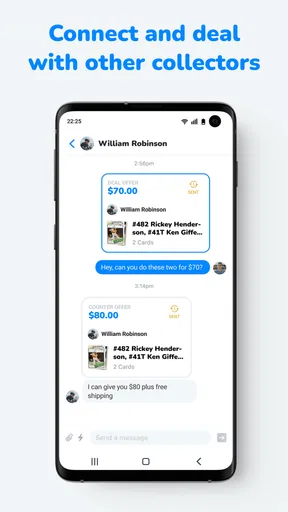
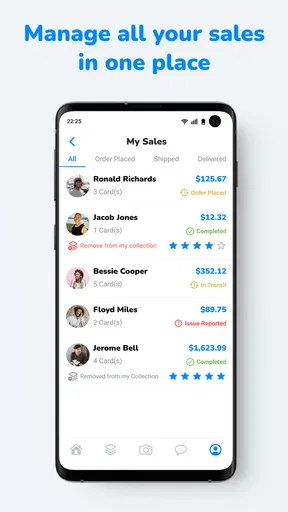
CollX is not only a private inventory tool: it also connects collectors and supports buying and selling. That social layer can be a plus if you want to discover how other people approach the hobby or find potential trading partners. It is also a reason to be deliberate. A scan or an online conversation does not remove the need to check a card’s condition, agree clearly on the terms, and make sure everyone involved is comfortable before exchanging anything.
Compared with a spreadsheet, the app offers a quicker route from camera scan to collection and market information, while a spreadsheet gives you more control over custom notes and household ownership. Compared with searching marketplaces manually, it can reduce the work of identifying a card, but it should not be treated as a promise that a matching listing will result in a sale at the displayed value. I see it as a convenient research and organization companion, not a replacement for a collector’s own judgment.
Getting Started with CollX
First things first, downloading and setting up CollX: Sports Card Scanner is a breeze. Available on both Android and iOS, it’s a quick install from your app store. Once you’ve got it on your device, the app greets you with a clean, user-friendly interface. No complicated menus or overwhelming options — just a straightforward setup that gets you scanning in no time.
Scanning Your Cards
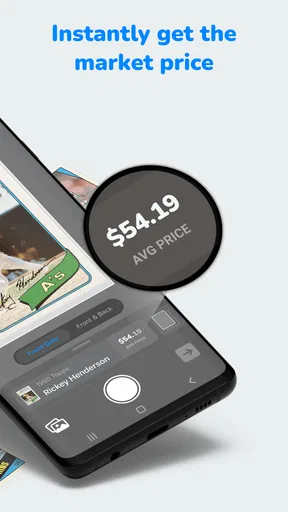
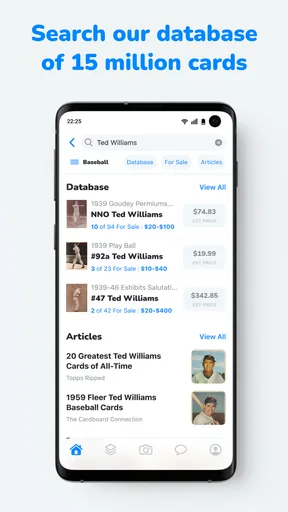
Now, let’s talk about what we’re all here for: the scanning feature. This is where CollX really shines. You simply use your phone’s camera to scan the card, and the app does the heavy lifting. It identifies the card and pulls up relevant details, including its current market value. The best part? It’s usually spot on. I tested it with a few cards from my collection, and it nailed the details every single time.
For those moments when it can’t identify a card (which are rare), you have the option to manually input the details. A little extra work, sure, but the app makes it as painless as possible.
Market Insights at Your Fingertips
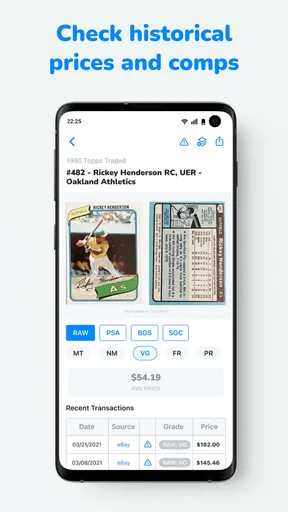
Once your card is scanned, CollX doesn’t just stop there. It provides a comprehensive look at the card's market value, including historical price trends and recent sales data. This is gold for those of us looking to buy, sell, or trade. Having all this information readily available on your phone makes collecting not only more informed but also a lot more fun.
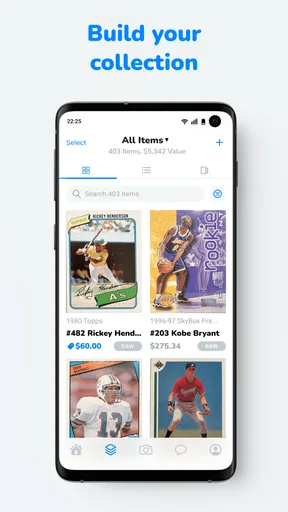
One feature I found particularly cool is the app’s ability to track your entire collection’s value over time. Watching your collection’s worth go up (or down) is a bit like checking your stocks, but way more fun!
Community and Connectivity
Being a part of the card collecting community is so much easier with CollX. The app allows you to connect with other users, compare collections, and even make trades. It’s like having a virtual card show in your pocket. Plus, the community feature is a great way to learn from other collectors and keep up with trends in the hobby.
What’s more, the app is continuously updated with new cards and features, keeping it fresh and relevant. The developers are clearly passionate about the hobby, and it shows in the app’s performance and updates.
Worth keeping in your collector’s toolkit
The app is free to install, has an Everyone content rating, and comes from CollX. Its 4.6 average from around 15,000 ratings, alongside more than a million installs, suggests that plenty of collectors have made it part of their routine. The current version is 3.4.2, and in-app purchases range from $6.99 to $99.99 per item, so I would check the purchase details before committing to anything beyond the free experience. It is a sports app with a clear niche rather than a general-purpose marketplace or inventory tool.
For a household, my recommendation is to use it as a shared research aid only when account ownership and card ownership are already clear. It can make a pile of cards less mysterious and make comparisons easier, but it cannot decide who owns a card, settle a family disagreement, or guarantee a sale price. The app was released on January 9, 2022, and supports devices running Android 7.0 or later; those details make it easier to judge compatibility, but the real question is whether scanning and market tracking fit your collecting habits.
Final Thoughts
So, is CollX: Sports Card Scanner worth your time? Absolutely. Whether you're a seasoned collector or just getting started, this app provides invaluable tools to manage and enhance your collection. The ease of scanning, combined with comprehensive market insights, makes it an essential tool. Plus, the community aspect adds a layer of engagement that’s hard to beat.
In a world where sports card collecting is experiencing a major boom, having an app like CollX can truly revolutionize how we approach the hobby. So go ahead, give it a try, and let your card collection thrive!
Privacy and Permissions
See what permissions an app requests and how it handles your data.
- Identity
- read your own contact card
- Contacts
- read your contacts
- Photos/Media/Files
- read the contents of your USB storage, modify or delete the contents of your USB storage
- Storage
- read the contents of your USB storage, modify or delete the contents of your USB storage
- Camera
- take pictures and videos
- Microphone
- record audio
- Wi-Fi connection information
- view Wi-Fi connections
- Other
- view network connections, full network access, run at startup, control vibration, prevent device from sleeping
Verdict
Strengths of CollX: Sports Card Scanner
- Instantly scans and identifies sports cards.
- Supports a wide range of card types.
- User-friendly interface with smooth navigation.
- Provides real-time market value estimates.
- Enables easy organization of card collections.
Limitations of CollX: Sports Card Scanner
- Limited offline functionality.
- Requires premium for some advanced features.
- Occasional inaccuracies in card recognition.
- May not support very rare card types.
- In-app ads can be intrusive.
Similar Picks in This Category
View All
BeSoccer: Soccer Live Score
BeSoccer apps4.3

Cricbuzz - Live Cricket Scores
Cricbuzz.com3.7

NFL
NFL Enterprises LLC2.4

Da Fit
MO YOUNG LIMITED3.6

ESPN
Disney4.5

LiveScore: Live Sports Scores
LiveScore Limited4.5
Frequently Asked Questions
What is CollX: Sports Card Scanner used for?
CollX: Sports Card Scanner is an app designed for sports card enthusiasts to easily scan and identify their sports cards. It provides instant pricing and valuation, helping collectors manage their collections efficiently. Users can also explore trending cards and connect with other collectors through the app's community features.
How accurate is the card scanning feature in CollX?
CollX utilizes advanced image recognition technology to ensure high accuracy in identifying sports cards. While the app is designed to recognize a wide range of cards, accuracy can vary based on factors such as lighting conditions and card condition. Regular updates aim to improve recognition capabilities.
Can I trade or sell cards directly through CollX?
Yes, CollX allows users to connect with other collectors, enabling them to trade or sell cards directly within the app. It facilitates easy communication and negotiation between users, though it's important to note that transactions are conducted at the users' own risk and discretion.
Is CollX free to use, or are there in-app purchases?
CollX is free to download and use, providing essential features at no cost. However, it also offers in-app purchases and subscription plans that unlock premium features, such as advanced analytics, bulk scanning, and enhanced trading tools, providing a more comprehensive collecting experience.
What types of sports cards can CollX recognize?
CollX is equipped to recognize a wide variety of sports cards from major sports like baseball, basketball, football, and more. The app continuously updates its database to include new releases and popular cards, ensuring broad recognition across different sports and card brands.
